
Designing for Wellbeing: How Interior Environments Shape How We Feel and Function
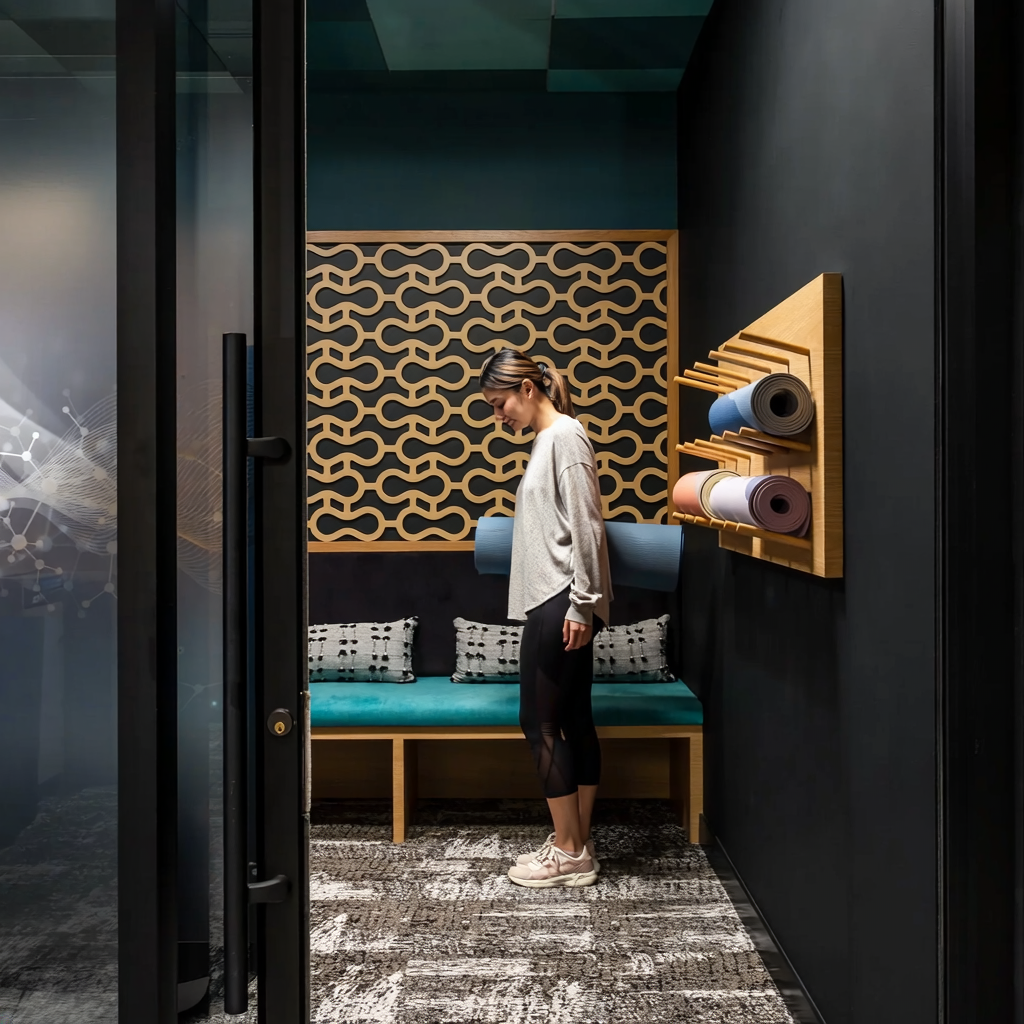
Relaxation Room;
34F Design for Acuitus Therapeutics
The environments we inhabit influence how we feel, function and connect throughout the day. For interior designers, this creates an opportunity to consider wellbeing as an integral part of how spaces are planned, detailed and experienced.
This relationship between our surroundings and our wellbeing is particularly relevant across the sectors 34F works within. A workplace, healthcare environment, educational setting, multifamily community or hospitality space each supports different activities, patterns of interaction and expectations. Understanding these differences allows design to respond thoughtfully to the people who use each environment.
Across these varied settings, qualities such as comfort, connection, privacy, focus, accessibility and a sense of belonging contribute to the experience of place. Considering these qualities alongside function, aesthetics and performance allows interior environments to support the people who use them in meaningful and lasting ways.
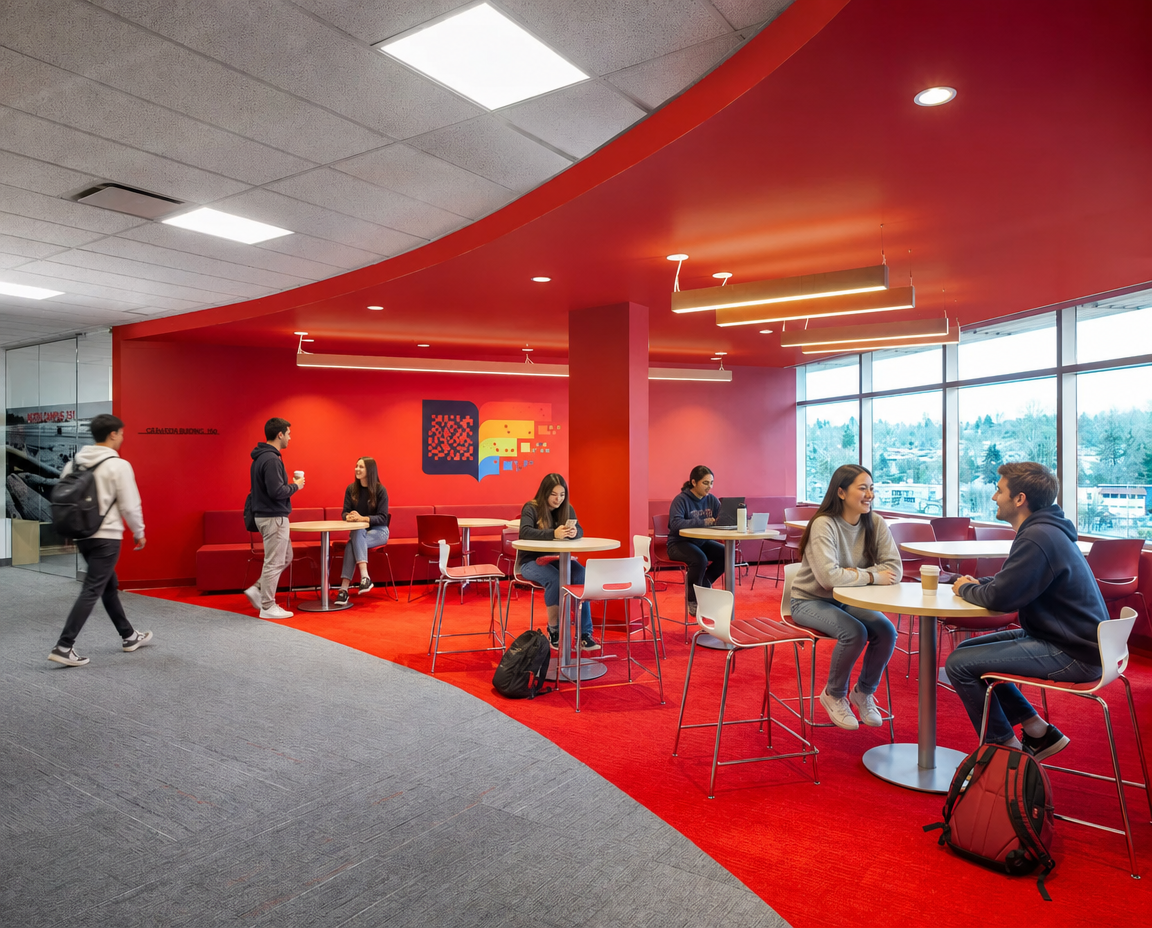
Student Lounge;
34F Design for Coquitlam College
Different Sectors, Different Needs
Wellbeing takes on different dimensions depending on the environment and the people who occupy it.
In the workplace, people move between focused individual work, collaboration, informal interaction and moments of concentration throughout the day. A range of settings can support these different modes of work, giving people greater choice in where and how they engage with their tasks and colleagues. Access to natural light, comfortable acoustics, opportunities for privacy and spaces for informal connection can all contribute to a more supportive daily experience.
In healthcare environments, comfort and clarity take on particular importance. Patients, families, visitors and staff each experience the environment differently, often within circumstances that can already carry significant emotional or physical demands. Clear wayfinding, appropriate privacy, access to daylight, considered acoustics and comfortable waiting and gathering areas can help create an environment that feels intuitive, dignified and welcoming.
Educational environments similarly support a wide range of experiences. Students may move between individual learning, group work, social interaction and independent study throughout the day. Flexible spaces, varied levels of stimulation, access to natural light and opportunities for both collaboration and quiet concentration can support these changing needs.
In multifamily environments, wellbeing extends across both private and shared experiences. The home provides a place for privacy and restoration, while amenity spaces, outdoor areas and shared circulation can create opportunities for community and connection. The relationship between these experiences is an important part of creating a residential environment that feels both personal and connected.
Hospitality and retail environments bring another dimension to the conversation, where the experience of a space is closely connected to atmosphere, comfort and engagement. Spatial flow, lighting, materiality, acoustics and the transition between active and quieter areas all contribute to how people experience a destination.
Across each sector, the design response is different, but the underlying consideration remains connected: how can the environment support the people, activities and experiences that take place within it?
The Spaces We Inhabit Shape How We Feel and Function
The qualities of an interior come together to create an experience that is both physical and perceptual. Light, sound, materiality, spatial organization, scale and movement all contribute to how we navigate and engage with our surroundings.
Natural light and views to the outdoors can provide a sense of connection to the environment beyond the interior. Materiality and colour contribute to atmosphere and character. Acoustics influence our ability to focus, communicate and find moments of quiet. Spatial planning establishes relationships between activity and retreat, while clear circulation and wayfinding can make environments easier to understand and navigate.
These considerations become particularly meaningful when viewed together.
A workplace with a variety of settings can support different levels of concentration and interaction. A healthcare environment with intuitive circulation can make an unfamiliar setting easier to navigate. A residential amenity space can encourage social connection while providing areas for quieter activity. An educational environment can offer spaces that respond to different learning and social experiences.
Each decision contributes to the overall experience of the interior.
This is where the value of a thoughtful design process becomes particularly apparent. Wellbeing can be supported through many individual choices, but it is often the relationship between those choices that creates the most meaningful result.
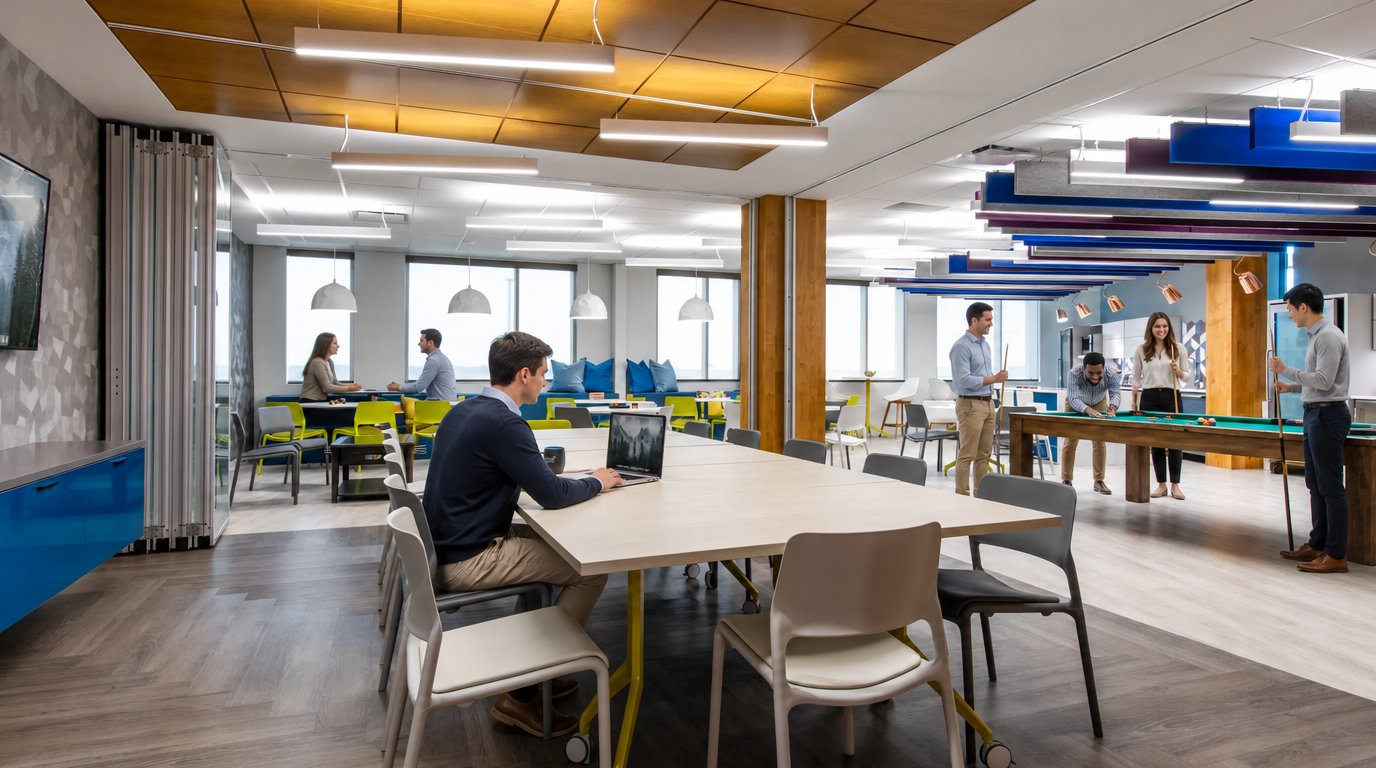
Staff Lounge;
34F Design for SCM Insurance
Designing for Choice, Connection and Moments of Pause
Choice is an important component of how people experience their environment.
Throughout a day, our needs naturally change. We may seek interaction at one point and privacy at another, move from focused work into collaboration, or transition between periods of activity and rest. Environments that offer a range of settings can accommodate these shifts and give people greater agency in how they use the space.
Choice can be created through spatial planning, furniture arrangements, lighting, acoustics, privacy levels and the relationship between active and quieter areas. It can also be embedded into the way spaces connect, allowing people to move between different experiences without leaving the broader environment.
Connection is equally important. Shared spaces can encourage informal interaction, strengthen a sense of community and create opportunities for people to engage with one another naturally.
In a workplace, this might take the form of a welcoming shared lounge or collaborative setting. In multifamily, it could be an amenity space or courtyard that encourages residents to gather. In education, it may be a commons or social learning environment that supports interaction beyond the classroom.
Connection is complemented by opportunities for pause and retreat.
A quiet corner, window seat, landscaped courtyard, comfortable lounge or transitional space can provide a moment to step away from activity and reset. These spaces can be modest in scale while still playing an important role in the overall rhythm of an environment.
Together, choice, connection and pause create a more responsive experience—one that recognizes the different ways people move through a space over the course of a day.
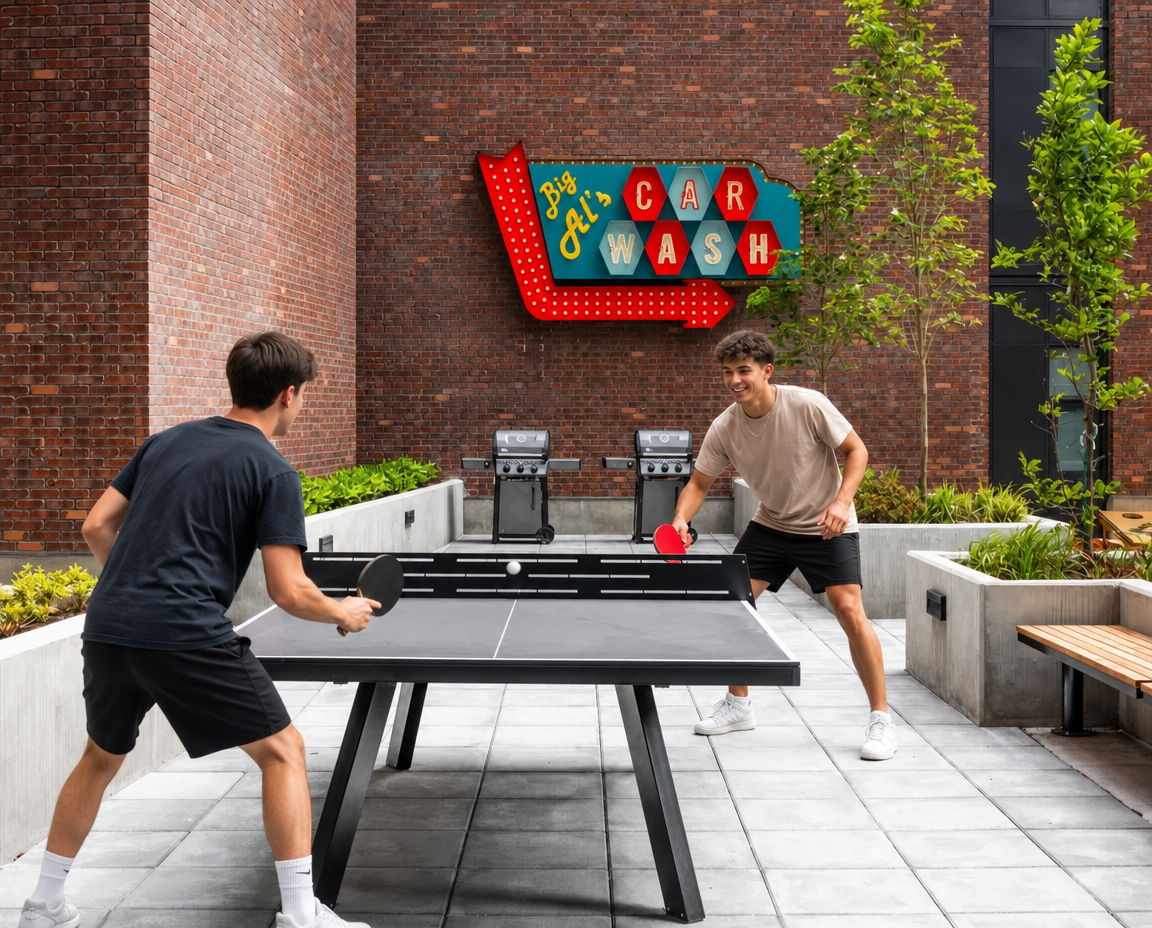
Outdoor Recreation;
34F Design for Hudson Place
Designing With the Whole Experience in Mind
Supporting wellbeing through interior design involves considering the many layers of experience that come together within a space.
Lighting, acoustics, materiality, accessibility, ergonomics, privacy, wayfinding, spatial hierarchy and connection to nature all have a role to play. So do the less tangible qualities of an environment: familiarity, comfort, belonging and the ability to choose how we engage with the space around us.
This perspective is relevant across every sector of interior design. The priorities may change, but the people at the centre of the experience remain.
At 34F, our work spans environments where people work, learn, heal, live, gather and connect. Each project brings its own context, users and opportunities, and those factors inform how we approach the design.
World Mental Health Day provides an opportunity to reflect on that relationship between people and place. The environments around us form part of our everyday experience, and thoughtful design can contribute to spaces that support comfort, connection, focus, restoration and belonging.
Ultimately, designing with wellbeing in mind is about understanding the full experience of a space and the people within it. It is found in the balance between activity and quiet, openness and privacy, individual needs and shared experience.
When these relationships are considered from the beginning, interior environments can support people in the many ways they work, learn, live, heal and connect.
About 34F
34F brings together expertise in interior design, architecture, construction management and prime consulting to look at projects from every angle. By understanding how design decisions connect with budgets, schedules, technical requirements and construction, we anticipate challenges early and develop solutions that move projects forward. This integrated, big-picture perspective is central to how we work.